The Secret Life of the Parish Noticeboard — And How to Read It Like a Local
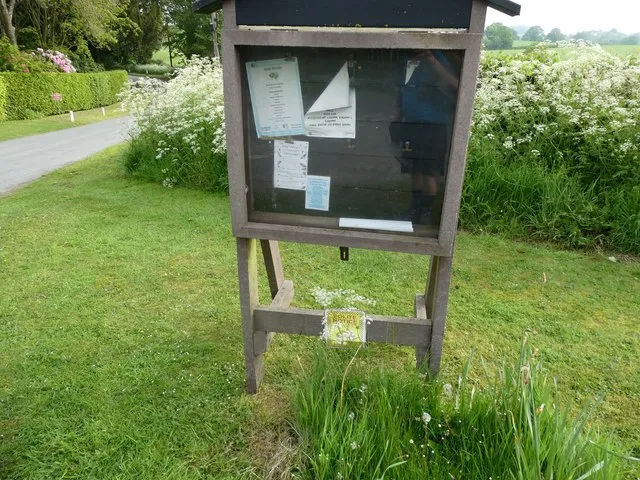
Photo: Jeremy Bolwell , CC BY-SA 2.0, via Wikimedia Commons
There is a noticeboard in your local library that knows more about your town than you do. It knows about the pilates class in the scout hut, the WI coffee morning, the missing cat, the table-top sale and the amateur dramatics society's production of something with a pun in the title. It is held together with drawing pins and hope. And it is a goldmine — if you know how to read it.
First, learn the dialect
Local noticeboards have their own language. 'WI' means Women's Institute, not wireless internet. 'U3A' is the University of the Third Age, which is less about exams and more about history talks and walking groups. 'Messy Church' is not a warning; it's crafts, songs and snacks, usually aimed at families. 'Table top sale' means car boot sale indoors, with better parking and worse weather. 'Coffee morning' usually means cake, a raffle and a worthy cause. 'Pilates in the scout hut' means exactly that — bring a mat, arrive early, and don't park across the fire exit.
The five clues that separate a gem from a ghost event
Not every poster is worth your Saturday. Some are ancient. Some are vague. Some are for events that already happened. Here's how to sort the real from the relic.
- A named human. A poster with a phone number and a first name — 'ring Jan on 07...' — is usually a real event run by a real person. A poster with no contact details is a rumour.
- A fresh date. Check the year. Check the month. A Christmas fair poster in February is either very organised or very old.
- Specifics. Time, price, venue, whether there's parking. If it says 'details TBC', it might still be lovely, but you're taking a chance.
- Cross-reference. If the same event appears on the library board, the café board and the church porch, it's probably happening. If it's only on one laminated sheet in a dim corner, proceed with caution.
- A real address. 'The old school' is not an address. 'The old school, behind the Co-op, entrance on Mill Lane' is an address.
Where the good boards hide
The best noticeboards are not always the obvious ones. The library is reliable. The church porch is underrated. The café by the bus stop is often excellent, because it catches people with time to kill. The village hall window is a classic. Don't ignore the leisure centre, the farm shop, the post office or the train station — anywhere people stand still for two minutes.
Take a photo of anything interesting. Noticeboards are ephemeral. The poster you saw on Tuesday might be gone by Friday, replaced by a reminder about bin collections or a lost drone. If you see something that looks good, note the date and the contact details before someone else's flyer covers it up.
A field guide to the notices you'll meet
Here are a few species you're likely to spot.
The WI notice: usually crisp, well-designed and slightly intimidating. It might advertise a talk on 'The History of Wallpaper' or a jam-making demonstration. Do not assume it's all jam. There is probably also a book club.
The pilates flyer: a photo of a woman on a mat, a phone number, and the words 'all levels welcome'. This is usually true, but 'all levels' can mean 'you will be doing complicated things with a band'.
The repair café poster: take your broken toaster, someone will look at it. This is one of the most wholesome events on any board.
The local history society: a talk about old photographs of the high street. Surprisingly gripping.
The table-top sale: arrive early for the good stuff, bring cash, and don't haggle over a 50p paperback.
The quiz night: a chance to discover that your neighbour knows every question about 1980s advertising jingles. Check whether it's teams of four or six before you arrive.
Your challenge for November 2026
Here's the challenge: find one thing to do this month that isn't a chain restaurant or another streaming queue. Go to a noticeboard — any noticeboard — and pick one event. A coffee morning. A film night. A repair café. A talk about wallpaper. It doesn't have to be cool. It just has to be local.
Take a friend, or go alone and talk to someone. Buy a cake. Put a pound in the raffle. You might discover that your town has a secret life you've been walking past for years. The noticeboard knew all along.