Five Quid, a Folding Chair and a Proper Interval: Why Village Hall Cinema Nights Are Having a Moment

Photo: Jaggery, CC BY-SA 2.0, via Wikimedia Commons
On a damp Tuesday in November, somewhere between the parish council minutes and the badminton nets, a projector is warming up. The screen is slightly wonky. The radiator clanks. Someone is selling tea from an urn that has clearly seen things. And a crowd of forty people — teenagers, grandparents, a few dogs — is settling into stacking chairs for a film that costs less than a fancy coffee.
Welcome to the village hall cinema night: the UK's most quietly brilliant night out. All over the country this winter, community centres, church rooms and scout huts are turning into makeshift picture houses. Tickets are usually £5 or thereabouts. The popcorn might be from the Co-op. The atmosphere is better than you'd expect.
This isn't a nostalgia trip for people who can't handle a multiplex. It's a practical, social, slightly chaotic alternative — and it's having a moment.
The fiver gets you in, but the interval keeps you there
Let's be honest about the multiplex. A family of four can easily spend £40 on tickets before anyone has even looked at a bucket of popcorn. The village hall cinema does not have reclining seats or a Dolby sound system. What it does have is a ticket price that doesn't require a financial planning meeting.
But the real magic isn't the £5. It's the interval. Halfway through, the film stops, the lights go up and everyone shuffles towards the tea urn. There's cake. There's a raffle. There's a chance to talk to the person next to you without shouting over trailers. You might bump into your child's teacher, your neighbour's dad or the woman who runs the flower rota. It is, in the best possible way, a village square with a screen.
What a typical night actually looks like
Every community cinema is different, but most follow a familiar rhythm. Doors open around half an hour before the film. A volunteer sits at a table with a cash tin, a card reader if you're lucky, and a clipboard. You get a ticket — sometimes a raffle ticket, sometimes a hand-drawn stub — and you find a seat.
Seating is usually stacking chairs, with a few sofas or beanbags at the front for kids. Bring a blanket if you're prone to feeling the cold. Some halls run a licensed bar; others rely on squash and biscuits. Many ask you to bring your own mug for tea, which is either charming or a mild inconvenience depending on how much you like communal crockery.
The film choice is where things get interesting. Some groups show recent releases a few months after the multiplex. Others lean into classics, family favourites or themed nights. One hall might show a black-and-white comedy because the committee voted for it; another might let the audience choose from a shortlist. You are unlikely to get the same film you'd pick on streaming, and that's part of the point.
Charm is doing a lot of heavy lifting — and that's fine
Let's not pretend a village hall cinema beats a multiplex on comfort. The screen might be a bit dim. The sound might wobble. Someone's phone will go off, and it will be the ringtone of a person who has never learned to silence it. There may be a squeaky chair. There may be a child asking loudly why the film is in French.
But charm is not a small thing. A multiplex is designed to make you forget where you are. A village hall cinema does the opposite: it reminds you that you live somewhere, with people, in a place. The volunteers on the door are your neighbours. The raffle prize is a hamper from the local bakery. The proceeds might go towards new curtains for the stage or the scout hut roof. You are not just watching a film; you are part of a small, local occasion.
How to find one near you
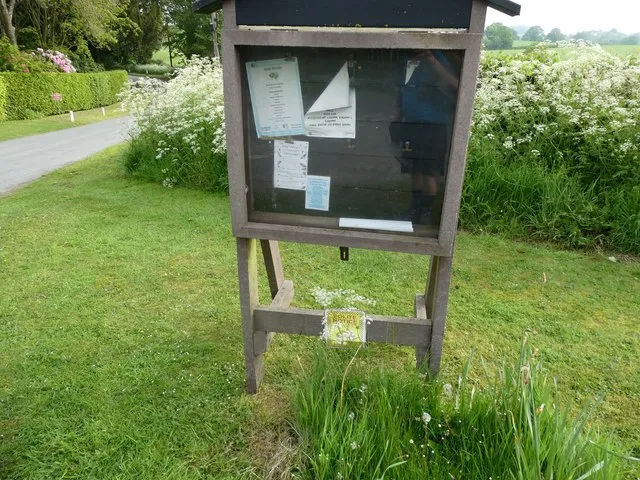
You don't need a secret handshake. Start with the places where local life leaves a paper trail: the library noticeboard, the church porch, the village hall window, the café by the bus stop. Parish council websites often have a community directory. Local Facebook groups — love them or loathe them — are useful for 'does anyone know if the hall is doing a film night?' posts.
Search for 'community cinema' plus your town or village, and you'll often find a volunteer-run group with a mailing list. Some charge £5; others £7 or £8. Most are cash-friendly but increasingly take card. If you're unsure, ring the number on the poster. A real person will probably answer, and they will be delighted you asked.
And if there isn't one? That's how these things start. A projector, a hall, a few willing neighbours and a tub of Quality Street. You don't need a cinema licence to show a film in a community setting if the event is not-for-profit and certain conditions are met — but check the rules with the hall and the film distributor first. The committee will know.
This winter, before you default to another streaming queue, look up your nearest village hall cinema. Take a fiver. Take a mug. Take someone who hasn't been out in ages. The screen might be wonky, but the night will be properly local.