The Bend Where Dreams Die: A Field Guide to Your Village Duck Race
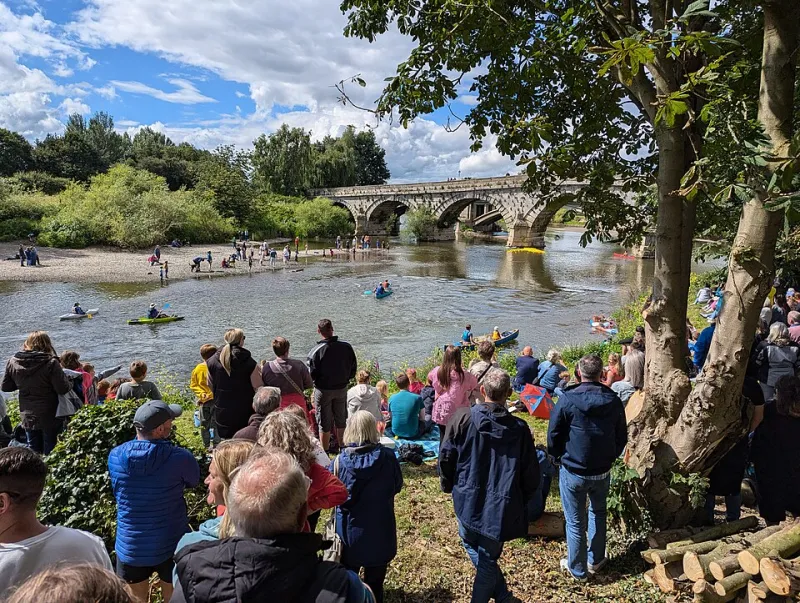
Photo: TCExplorer , CC BY-SA 2.0, via Wikimedia Commons
Every village has its rituals. Some are solemn. Some involve a vicar, a megaphone and a slightly damp clipboard. Then there is the duck race: a charity event where a few hundred plastic ducks are tipped into a brook and everyone pretends the result is fair. It is glorious. It is also completely chaotic. If you are new to the parish, or you have been drafted onto the bank by a friend who said it would only take an hour, here is a field guide to the great British village duck race.
First, accept that the river is in charge
You can print the programme. You can mark the course with little flags. You can even produce a laminated risk assessment. None of it matters once the first duck hits the water. The brook has its own opinions, and they are usually expressed through a combination of low branches, hidden eddies and a suspiciously strong current near the weir.
The organisers will call it ‘variable conditions’. The crowd will call it ‘the bit where they all get stuck’. Either way, the race is less a test of duck speed than a meditation on water management. Dress for the bank, not the beach. Wear shoes you can afford to lose to mud, and bring a sense of humour.
The numbering system is a beautiful fiction
At some point before the start, a volunteer will read out numbers from a list while another volunteer scribbles on a clipboard. This is known as ‘the draw’. It is not rigged, exactly. It is simply that the numbers are small, the light is poor and half the ducks have been used since 1998, so several of them are now the same shade of faded yellow.
You will be asked to pay 50p, or perhaps a pound, for a duck. You will be handed a raffle ticket with a number on it. You will then spend ten minutes trying to match that number to a duck that already looks exactly like every other duck. This is part of the experience. Do not fight it.
How to pick your duck (without overthinking it)
There is no scientific method. There is only folklore. Some people choose the duck nearest the left side of the bucket. Some refuse any duck that has been handled by the commentator. Others swear blind that a duck with a slightly scuffed beak is a lucky duck, because it has ‘been through it’ and knows the course.
The best approach is to pick quickly, commit loudly and then blame the current later. That way you get the full emotional arc of the race: hope, confusion, mild outrage and a cup of tea. If you are buying for a child, let them choose. Their instincts are usually better than yours, and their disappointment is more photogenic.
The bend where dreams die
Every course has one. It might be a slow left-hand turn behind the village hall, or a shallow patch under a footbridge where the water barely moves. Either way, it is the place where half the field will arrive at the same time and immediately become a plastic traffic jam.
This is the true spectacle of the duck race. Not the finish, but the bend. You will see duck number 47 nose gently into the bank. You will see duck number 12 overtake it on the inside. You will see a duck that nobody admits to owning drift backwards for no reason at all. The commentator will describe this as ‘a real tussle’, which is generous.
If your duck gets stuck at the bend, you are allowed to shout encouragement. You are not allowed to wade in. This is the one rule everyone remembers after the incident of 2019, when a well-meaning uncle tried to ‘help’ and ended up losing a shoe to the brook. The brook kept the shoe. The village kept the story.
The commentator will misread the finish
The commentator is usually a local councillor, a retired teacher or someone who once did a bit of radio. They have a microphone, a clipboard and a deep belief that they can see the finish line from where they are standing. They cannot.
As the leading ducks approach the line, the commentary will become increasingly confident and increasingly wrong. ‘It’s the red one! No, the yellow one! Actually, it’s the one with the… is that a duck or a leaf?’ The crowd will crane forward. Someone will point. Someone else will say, ‘That’s not even a duck, that’s a crisp packet.’ And then a volunteer with a landing net will calmly scoop up the actual winner, which has been quietly minding its own business near the far bank for the last two minutes.
The landing-net volunteers are the real heroes
These are the people who stand ankle-deep in the water, holding long nets and pretending they are not cold. They are the race’s unsung officials. They catch the finish, rescue the stragglers and occasionally fish out a duck that has decided to go rogue and head for the pub.
Treat them with respect. They have seen things. They know which duck is cursed. They know which part of the bank collapses if you stand on it. If one of them tells you to move back, move back. They are not being bossy. They are preventing you from becoming part of the course.
The raffle table tells you everything
The raffle table is the soul of the village in tabletop form. There will be a hamper. There will be a bottle of something elderflower. There will be a voucher for a haircut, a box of biscuits and a mysterious jar with a handwritten label that says ‘chutney – use by Tuesday’. Possibly a second hamper. Probably a knitted duck.
Buy a strip of tickets. You will not win the hamper. Nobody ever wins the hamper unless their name is already on the rota for something else. But the raffle table is where you learn the village’s real hierarchy. The person running it knows everyone. They will tell you who made the chutney, who donated the biscuits and which duck in the race was bought at the last minute by someone who ‘should know better’.
The quiet scandal of the late duck
Ah yes. The late duck. Every race has one. It is bought after the start, or just before, by someone who arrives with a tenner and a hopeful expression. The organisers say no. Then they say yes, because it is for charity and the duck is already in the bucket. Then the late duck wins, and the crowd has to decide whether to cheer or grumble.
Usually they cheer, because it is a duck race and nobody wants to be the person who takes it too seriously. But there will be a quiet conversation by the tea urn. There always is. The late duck is not a cheat, exactly. It is simply a reminder that the universe has a sense of humour, and it usually wears a faded yellow beak.
Etiquette for the bank
Stand back from the edge. Cheer for your duck, but do not cheer for it so loudly that you drown out the commentator. If you lose, congratulate the winner and then immediately suggest a rematch. If you win, do not gloat. Nobody likes a gloater, especially when the prize is a certificate and the knowledge that your duck was probably just lucky at the bend.
And if you are asked to help pack away afterwards, say yes. It takes twenty minutes. You will be handed a bin bag, a stack of folding chairs or a duck that needs its number re-gluing. It is the least you can do. The duck race is a village tradition, and traditions do not run themselves. They run on 50p coins, raffle tickets and the quiet heroism of people in wellies.
GoCas is all for a local day out with a bit of chaos and a lot of community spirit. So go on: buy a duck, pick a spot by the bend and prepare to be outraged by the finish. It is the most fun you can have with a plastic bird and a raffle ticket.