The Moral Weight of a Broken Toaster: A Beginner's Guide to the Saturday Tip Trip
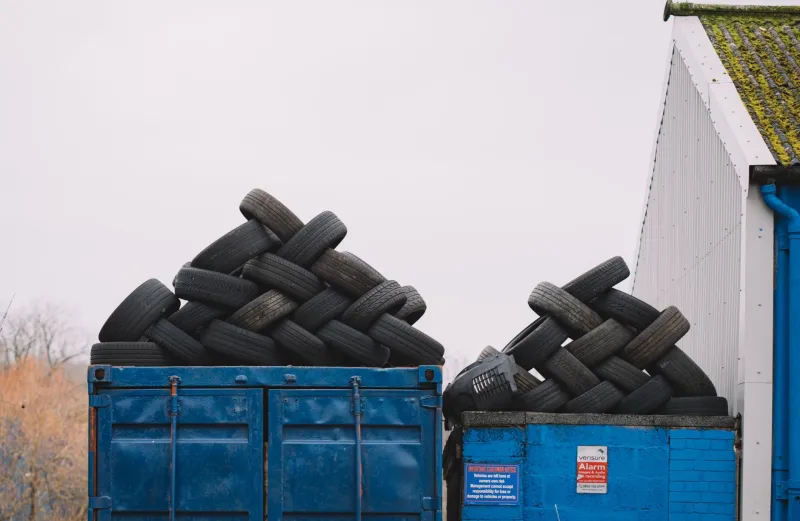
Saturday morning, 8.40am. The boot is open, the toaster is wedged beside a soggy cardboard box, and you are trying to decide whether the broken garden chair counts as household waste or a cry for help. This is the moment the tip trip stops being a chore and becomes a personality test.
We all know the types. There is the boot-Tetris champion who can fit a dismantled wardrobe around a child's bicycle without moving the spare tyre. There is the optimistic recycler who has brought three bags of things that are technically not allowed and is preparing a speech. And there is the person who has simply come for the reuse shop and will leave with a lamp they definitely do not need.
The household recycling centre is many things: a practical service, a local landmark, a Saturday ritual and, occasionally, a theatre of silent judgment. Treat it with respect, a little patience and the right footwear, and it can even be quite good fun.
The boot is the first test
Before you leave the house, check the council website. This is not the thrilling part of the morning, but it is the part that saves you from being turned away at the barrier because you have arrived with a van, a trailer or a quantity of rubble that needs a permit. Rules vary from area to area, and the staff at the gate have heard every excuse. The website is dull; the queue is duller.
Load the car with the heavy things at the bottom and the light things on top. Put sharp or dirty items in a sturdy box. Keep black bags to a minimum, because staff may need to see what is inside, and nobody enjoys the moment a bag splits in front of an audience. If you are bringing paint, chemicals, batteries or anything with a warning label, check where they go before you join the main queue. The answer is usually not 'wherever there is a gap'.
And wear sensible shoes. This is not a fashion parade. It is a place where a stray nail can ruin your morning and a pair of flip-flops can ruin your week.
The barrier, the nod and the unspoken code
At the entrance, you will often meet a staff member who can read your entire boot load in one glance. They may ask what you have brought. Answer honestly. A vague wave towards the back seat will not help anyone, least of all you. If you are unsure where something goes, ask. The people who work at the tip are not there to trick you. They are there to keep the site moving, keep people safe and stop the skips filling up with things that should be elsewhere.
Inside, the site has its own choreography. Cars edge forward. Boots open. People lift, drag and occasionally wrestle. There is a rhythm to it, and the rhythm is not fast. The golden rule is simple: do not block the lane while you have a think. Pull into a bay, unload, and move on. If you need to rearrange the car, do it in a parking space rather than halfway between the mattress skip and the cardboard container.
The unspoken code of who gets to reverse first is mostly common sense, lightly seasoned with eye contact. If someone is already angled in, let them finish. If you are waiting, do not creep forward until you have made eye contact with the person in front. A friendly nod is the local handshake. A shrug and a reverse light are not.
Staff who know everyone
The recycling centre is one of the few places where the staff genuinely know the community. They will recognise the regulars, the people who arrive every weekend with a perfectly organised boot, and the people who arrive once a year with a shed's worth of mystery. They will also know which local charity shop takes furniture, which school is collecting old pens and which neighbour has been looking for a spare paving slab.
Be kind to them. They are working in all weathers, managing heavy machinery and explaining for the hundredth time that polystyrene is not the same as cardboard. A cheerful greeting costs nothing. Listening to their instructions saves everyone time.
The reuse shop trap
Then comes the dangerous part: the reuse shop. You arrive with a broken toaster and leave with a working bread maker, two novels, a picture frame and a bicycle helmet that fits nobody in your family. This is normal. The reuse shop is a treasure chest with a queue, and it has a special talent for making you believe you need things you have never once thought about.
Set yourself a rule before you go in. A strict budget is a good start. A measurement of your available shelf space is even better. The phrase 'it's only a few quid' has furnished many homes and cluttered many garages. If you are buying something electrical, check it has a plug and a label. If you are buying furniture, make sure it fits in the car. The walk of shame back to the donation desk is real.
A first-timer's checklist
- Check the council website for opening hours, permits and booking rules.
- Sort your load before you leave the house.
- Keep hazardous waste separate and ask where it goes.
- Wear gloves and sensible shoes.
- Do not block the unloading lanes.
- Ask staff if you are unsure. They would rather answer a question than clear up a mess.
- Visit the reuse shop last, or you will never make it to the skips.
Why the tip trip matters
It is easy to mock the Saturday tip run, but it is one of the quiet rituals that hold local life together. It gets people out of the house, starts conversations in the queue and gives useful objects a second chance. It also forces us to face the sheer volume of stuff we accumulate. That is not a lecture; it is just a fact, usually discovered while standing beside a skip wondering how one household managed to own three broken kettles.
So load the boot, check the rules and keep your patience. The tip is not glamorous. It is not meant to be. But a Saturday morning there can tell you a lot about your neighbours, your council and, if you are honest, yourself. Just do not come home with another lamp.