The Fixers' Table: Why Your Broken Kettle Deserves a Saturday Morning Out
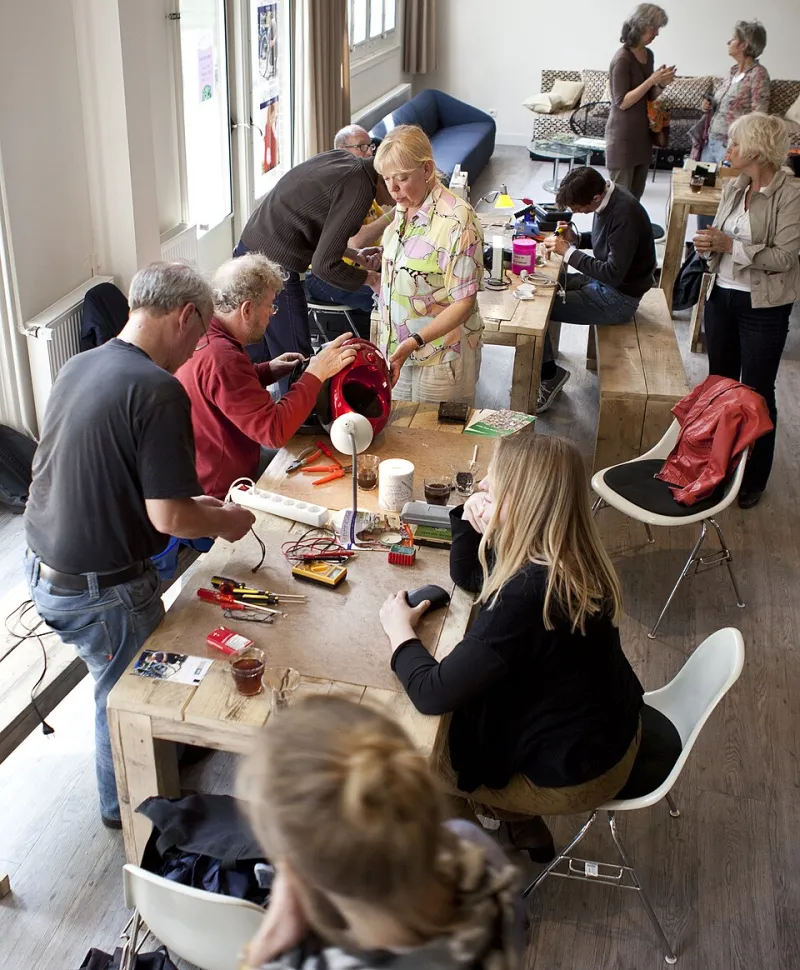
Photo: Ilvy Njiokiktjien, CC BY-SA 3.0, via Wikimedia Commons
There is a very specific sound to a repair café. It is not the gentle hum of a village hall coffee morning, although there is plenty of that. It is the click of a kettle being tested, the scratch of a screwdriver, and the low murmur of someone saying, 'Ah, there it is — that capacitor's had it.'
If you have never been to one, the idea can sound a bit worthy. A room full of volunteers prodding at broken household things while you wait politely with a carrier bag. In reality, it is one of the friendliest Saturday mornings you can have without buying a raffle ticket. You turn up with a faulty kettle. You leave with a working kettle, a biscuit inside you and the phone number of someone who knows a man about a lawnmower.
Here at GoCas, we are all for a local ritual that saves money and gets people talking. So here is what actually happens at a repair café, how to behave at the fixers' table, and why your nearest session might become your new monthly habit.
What Actually Happens When You Walk In
You will usually be greeted by someone with a clipboard and a slightly frazzled expression. They will ask what you have brought and whether you have any idea what is wrong with it. Do not worry if the answer is 'no idea, it just went bang.' That is practically the official opening line.
You will be pointed towards a table, where a volunteer fixer will take a look. Some sessions run on a first-come, first-served basis; others let you book a slot in advance. Either way, the golden rule is this: it is not a drop-off service. You stay with your item. You watch. You ask questions. You hold the torch when asked. This is not because they do not trust you with their screwdrivers — it is because the whole point is that you learn something, and because the fixer wants to show you what went wrong rather than perform a mysterious magic trick.
Some things can be fixed on the spot. Some need a part ordered in. Some get a gentle verdict of 'that's had it, love' — which is disappointing but still useful, because at least you know. Electrical items may be safety-checked, and anything that looks risky will probably be politely declined. Repair cafés are practical, not reckless.
The Unwritten Rules of the Fixers' Table
Every repair café has its own rhythm, but the etiquette is fairly universal. Bring the whole item, not just the bit you think is broken. Bring the charger, the cable, the manual if you still have it, and any little screws or attachments you have kept in a drawer. A fixer's face when someone produces the missing power lead is a beautiful thing.
Clean it first. Nobody wants to open a blender that still has last week's smoothie in it. Be honest about what happened — 'I may have used the wrong charger' is useful information, not a confession. And try not to hover so closely that you are practically breathing on the soldering iron. There is a difference between being interested and being in the way.
Expect to be asked questions. Expect to be shown a small component and told what it does. Expect to be told that the part costs more than a new one, which is not the same as being told to throw it away. And if you can, put a few quid in the donation tin. Repair cafés are usually run by volunteers, but solder, fuses and biscuits do not grow on trees.
Why It Has Become the New Village Hall Social
There is a reason these sessions are popping up in church halls, libraries and community centres across the UK. Partly it is the cost of living — when a new toaster costs £30 and a repair is free, the maths is obvious. Partly it is the environment — keeping things out of landfill feels better than adding to the pile. But the real draw is the company.
A repair café is a rare thing: a room where teenagers, retired engineers, young families and people who just fancied a nose around all end up chatting. You will hear conversations about everything from faulty lamps to lost dogs. Someone will be learning to solder. Someone else will be explaining why the fuse went. There is tea, there is usually cake, and there is a shared sense that things are better when they are not immediately thrown away.
It is a coffee morning with screwdrivers. It is a Men's Shed with a queue. It is the kind of local event that does not need a big budget or a celebrity opening — just a hall, a few tables and people willing to have a go.
How to Find Your Nearest Session
Start with a quick search online for 'repair café near me' or check the Repair Café network listings. Local libraries, council newsletters, transition town groups, church halls and community centre noticeboards are all good places to look. Facebook groups for your town or village often have the dates pinned. If you are in Wales or Scotland, there are dedicated networks worth checking; elsewhere, the global repair café map is a decent starting point.
Ring ahead if you can. Ask what they can fix and whether you need to book. Some sessions specialise in electricals, some in bikes, some in textiles and small furniture. Turn up early if it is first-come, first-served — the queue for the electronics table can be longer than the one for the cake.
Thinking of Starting One?
It is easier than you might think, but not quite as easy as putting out a few chairs and a sign. Talk to an existing repair café first. They will tell you about insurance, PAT testing, safeguarding and the joys of storing donated tools. Find a venue with good lighting and enough plug sockets. Recruit a mix of fixers — you do not need to be a qualified electrician to be useful, but you do need someone sensible in charge of anything mains-powered.
Start small. One Saturday morning a month. A few tables. A donation tin and a kettle for the volunteers. Put a notice in the library and on the village WhatsApp group. You will be surprised how many people have a broken lamp and a free morning.
What to Bring — and What to Leave at Home
Bring small household electricals, clocks, radios, toys, bikes, clothing and simple furniture. Bring the parts and cables. Bring your patience, because there may be a wait. Leave anything gas-powered, medical, or visibly unsafe at home. Leave the microwave unless the session specifically says it handles them — they are a different beast. And leave your pride at the door. There is no shame in admitting you do not know what a fuse does. Half the room does not either.
The Real Repair
The funny thing about repair cafés is that the item is almost beside the point. Yes, you might get your kettle back. You might get a diagnosis and a shopping list for parts. You might get told, kindly, that it is time to let go. But you will also get a morning out, a chat with someone you would never otherwise meet, and a small reminder that not everything broken needs to be binned.
So dig out that faulty toaster. Put it in a bag. Check the date of your nearest session. And if you see someone at the fixers' table looking a bit lost, pull up a chair. You are among friends.